
A washing machine making loud banging noises usually has an unbalanced load, an unlevel cabinet, or worn suspension parts. A washer making grinding noises usually has worn drum bearings, a foreign object caught in the drum or drain pump, or a failing drive component. SmartFix Appliance diagnoses noisy washers in Lake Stevens and nearby Snohomish County communities, with an $80 service and inspection fee that is applied toward the repair.
Some noises have a simple fix, such as redistributing a load. Others mean a part is wearing out, and every cycle adds more damage. This guide explains what each sound means, what you can check safely, and when to stop using the washer. When a part has failed, our washer repair service in Lake Stevens handles the diagnosis and repair.
What Does Your Washer Noise Mean?
The type of noise and the point in the cycle when it happens are the fastest way to narrow down the cause.
| Noise | When it happens | Likely cause |
| Loud banging or thumping | During spin | Unbalanced load, unlevel washer, worn shock absorbers or suspension rods |
| Washer walks or shakes | During spin | Unlevel feet, unbalanced load, worn suspension |
| Grinding or roaring that gets louder | During spin, worse at high speed | Worn drum bearings |
| Grinding or rattling | During drain | Object in the drain pump, failing drain pump |
| Metal scraping or clicking | During wash or spin | Coin, bra wire, or object caught between the drum and tub |
| Grinding during agitation | During wash, top-load washers | Worn motor coupling, transmission, or agitator parts |
| Squealing | During wash or spin | Worn drive belt |
Why Is My Washing Machine Banging?
Banging usually happens during the spin cycle, when the drum turns fastest and any imbalance or worn support part becomes obvious.
1. Unbalanced Load
An unbalanced load is the most common cause of banging during spin. A single heavy item, such as a comforter, rug, or pair of jeans, can bunch on one side of the drum and throw it off center. Stop the washer, spread the load evenly, and restart the spin. Washing bulky items with a few smaller items helps them balance.
2. Washer Is Not Level
A washer that is not level rocks and bangs during spin, and it can walk across the floor. Place a level on top of the washer, front to back and side to side. Adjust the leveling feet until the machine sits flat and all four feet touch the floor firmly. The Insurance Institute for Business & Home Safety advises keeping the washer level and leaving about 4 inches between the washer and the wall.
3. Worn Shock Absorbers or Suspension Rods
Shock absorbers on front-load washers and suspension rods on top-load washers hold the tub steady during spin. When they wear out, the tub swings and strikes the cabinet, which causes loud banging even with a balanced load. A washer that bangs on every load after you have checked the balance and leveling usually needs new suspension parts. Replacing them in sets keeps the tub supported evenly.
4. Shipping Bolts Left in a New Washer
New front-load washers ship with bolts that lock the drum in place during delivery. If those bolts are not removed during installation, the washer bangs and shakes violently on its first spin. Check the back of the machine for the bolts and follow the installation instructions in the owner’s manual.
Why Is My Washing Machine Grinding?
Grinding usually means metal parts are wearing against each other or an object is caught in a moving part. Grinding noises rarely fix themselves, so they need attention quickly.
5. Worn Drum Bearings
Worn drum bearings are the most common cause of a loud grinding or roaring noise during spin. The noise often starts quietly and gets louder over weeks, especially at high spin speeds. On front-load washers, a leaking tub seal can let water reach the bearings and speed up the wear.
Bearing replacement is a major repair because the technician has to take the tub apart to reach them. On an older washer, the repair price is worth comparing against the cost of a new machine.
6. An Object Caught in the Drum or Pump
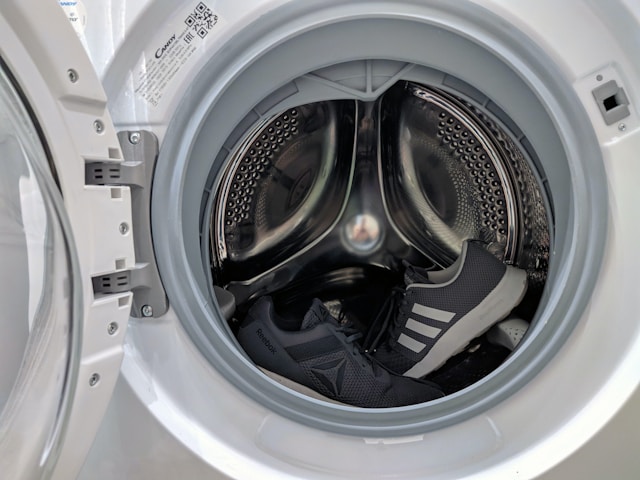
Coins, keys, bra wires, and buttons can slip between the inner drum and the outer tub. They cause scraping, clicking, or grinding as the drum turns. Objects that reach the drain pump make a grinding or rattling noise while the washer drains, and they can break the pump impeller.
Unplug the washer and check the drain pump filter if your model has an accessible one. Objects stuck between the drum and tub usually require a technician to remove a part of the washer to reach them.
7. Worn Motor Coupling, Transmission, or Belt
On many top-load washers, a worn motor coupling or transmission causes grinding during agitation. A stretched or worn drive belt can squeal or slip, especially with heavy loads. These parts transfer power from the motor to the drum, so a failure can also stop the washer from spinning. Our article on common reasons a washing machine is not spinning explains how belts and motor parts affect the spin cycle.
Should You Keep Using a Noisy Washer?
Stop using the washer if it makes a grinding noise, a metal scraping sound, or loud banging on every load. Continuing to run it can turn a single-part repair into a much larger one.
A worn bearing that keeps running can damage the drum support and tub. A tub that strikes the cabinet can break the suspension and crack internal parts. A loose object in the drum can tear clothes or damage the drum surface. Heavy shaking can also loosen hoses and cause leaks.
You can keep using the washer if the noise stopped after you rebalanced the load or leveled the machine. If the noise returns, schedule a diagnosis.
What You Can Check Before Calling a Technician
Unplug the washer before reaching into the drum or opening the pump filter, and plug it back in only to test a cycle. Work through these steps:
- Redistribute the load and run a spin cycle with a balanced load.
- Check the leveling with a level and adjust the feet.
- Empty pockets and check the drum for coins or loose items.
- Clean the drain pump filter on front-load washers that have one.
- Confirm shipping bolts are removed on a newly installed washer.
- Listen to one full cycle and note exactly when the noise happens.
If the noise continues after these checks, the cause is likely a worn or broken part.
How Much Does It Cost to Fix a Noisy Washer?
Fixing a noisy washer with SmartFix Appliance typically costs $220 to $280 for a standard repair in Lake Stevens, including parts and labor. Common repairs in this range include shock absorbers, suspension rods, drive belts, and drain pump repairs.
| Service | Price |
| Washer service and inspection fee | $80 |
| Washer repair range | $220 to $280 |
| Service fee when repair proceeds | Applied toward repair |
Drum bearing and transmission repairs take more labor and may cost more. SmartFix gives you a clear price before any work begins. Our guide to washing machine repair cost in Lake Stevens breaks down typical prices by part.
Which Washer Brands Does SmartFix Repair?
SmartFix Appliance repairs noisy washers from most major brands, including Whirlpool, Maytag, GE, LG, Samsung, and Speed Queen. Front-load and top-load washers use different suspension and drive parts, so knowing your brand and model helps the technician plan the repair. See the full list of washing machine brands we repair in Snohomish County.
SmartFix washer repair covers noise, leaks, drain problems, spin problems, and washers that will not start. SmartFix also serves Everett, Marysville, Snohomish, Mill Creek, Lynnwood, Mukilteo, Monroe, Arlington, and Granite Falls.
Frequently Asked Questions
Why is my washer banging during the spin cycle?
Banging during spin is usually caused by an unbalanced load, an unlevel washer, or worn shock absorbers or suspension rods. Rebalance the load and level the washer first. If the banging continues, the suspension parts likely need replacement.
What does a bad washing machine bearing sound like?
A bad bearing makes a grinding, rumbling, or roaring noise during spin. The sound usually gets louder at higher spin speeds and grows worse over time.
Is a grinding noise in a washer dangerous?
A grinding noise means parts are wearing against each other or an object is caught inside. Stop using the washer and have it inspected, since continued use can damage the drum, tub, or pump.
Can I fix a noisy washing machine myself?
You can rebalance loads, level the washer, clean the pump filter, and remove loose items from the drum. Bearings, suspension parts, couplings, and transmissions require disassembly and are best left to a technician.
How long does a noisy washer repair take?
Many suspension, belt, and pump repairs are completed in a single visit when the part is in stock. Bearing replacements take longer because the tub must be taken apart.
Stop Using It – Book a Diagnosis
If your washer is grinding, scraping, or banging on every load, turn it off and unplug it before the damage spreads. SmartFix Appliance will find the cause, give you a clear price before any work begins, and apply the $80 service and inspection fee toward the repair. Completed repairs are backed by a 30-day warranty.
Book a diagnosis or call or text (425) 648-9377.