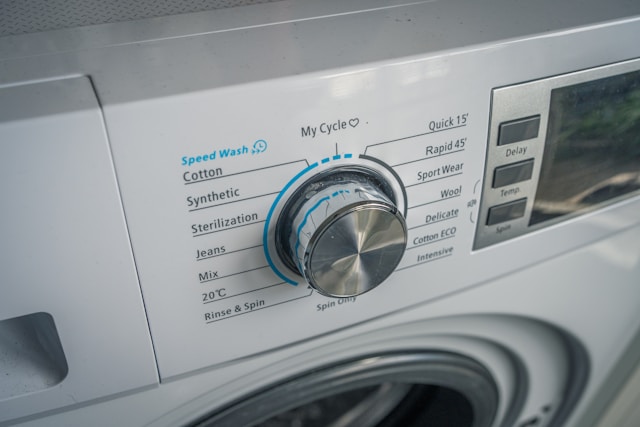

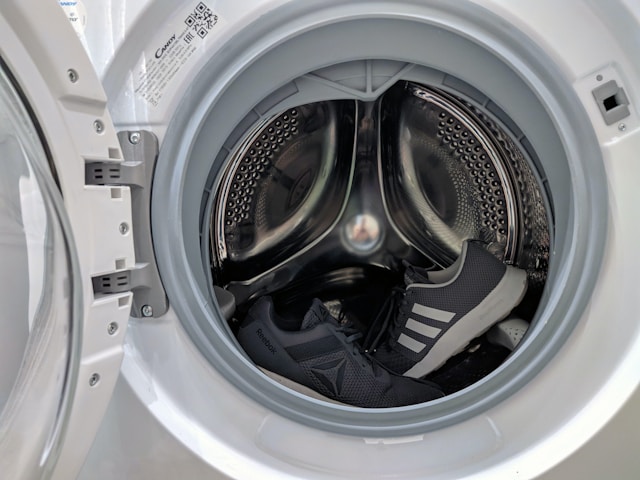
A washing machine that fills with water and completes part of the cycle but refuses to spin can quickly become a major inconvenience. Clothes may come out soaking wet, the cycle may stop unexpectedly, or the washer may make unusual noises without actually spinning the drum.
There are several possible reasons why a washing machine stops spinning. Some problems are relatively simple, while others involve mechanical or electrical components that require professional repair.
Here are six of the most common causes.
1. The Washer Is Unbalanced
An unbalanced load is one of the most common reasons a washing machine may refuse to enter the spin cycle.
Heavy items such as blankets, towels, or large pieces of clothing can collect on one side of the drum. When the washer detects excessive imbalance, many modern machines automatically slow down or stop spinning to prevent damage.
Try redistributing the clothes evenly inside the drum and restarting the spin cycle.
Avoid overloading the washer, especially when washing large or heavy items.
2. The Door or Lid Switch Is Faulty
Washing machines include a safety mechanism that prevents the drum from spinning when the door or lid is open.
Front-loading washers usually use a door lock assembly, while many top-loading machines use a lid switch.
If this component becomes damaged or fails electrically, the washer may incorrectly detect that the door is open and refuse to spin.
You may notice that the door does not lock properly or that the washer stops just before the spin cycle begins.
A technician can test the door lock or lid switch and replace it if necessary.
3. The Drive Belt Is Worn or Broken
Many washing machines use a drive belt to transfer power from the motor to the drum.
Over time, the belt can stretch, slip, crack, or break completely.
If the belt fails, you may hear the motor running while the drum remains stationary.
Other signs of a worn belt may include unusual squealing noises, inconsistent spinning, or a burning rubber smell.
Replacing a drive belt generally requires access to internal washer components and is best handled by an experienced appliance repair technician.
4. The Drainage System Is Blocked
Most washing machines will not begin the high-speed spin cycle until the water has drained from the drum.
If the drain pump, filter, or hose is clogged, water may remain inside the washer and prevent spinning.
Common signs of a drainage problem include:
- Water remaining inside the drum
- Slow draining
- Humming noises during the drain cycle
- Error codes related to drainage
- Clothes remaining extremely wet
Cleaning the washer filter may solve minor drainage problems. However, a blocked or damaged drain pump may require professional service.
5. The Motor or Motor Control System Is Failing
The motor is responsible for rotating the washing machine drum.
If the motor becomes damaged or the motor control system develops a fault, the washer may struggle to spin or stop spinning completely.
Depending on the washer model, the problem may involve the motor itself, motor brushes, wiring, sensors, or an electronic motor control board.
Electrical diagnosis is usually required to determine which component is responsible.
6. The Control Board or Sensor Has a Problem
Modern washing machines rely on electronic control boards and multiple sensors to manage each stage of the wash cycle.
A faulty control board, speed sensor, water-level sensor, or wiring connection can interrupt the spin cycle.
The washer may stop unexpectedly, display an error code, or behave inconsistently from one cycle to another.
Because these components often require specialized diagnostic equipment, professional inspection is recommended.
What Should You Do If Your Washer Won’t Spin?
Start by checking the load inside the washing machine. Make sure the drum is not overloaded and that heavy items are distributed evenly.
Next, check whether the washer is draining properly and whether the door or lid closes securely.
If the machine still refuses to spin, avoid repeatedly restarting it. Continuing to operate a washer with a damaged belt, motor, pump, or bearing can sometimes make the problem worse.
Professional Washer Repair
A washing machine that will not spin may have a relatively simple problem or a more serious mechanical or electrical failure.
Our appliance repair technicians diagnose and repair common washer problems, including spin-cycle failures, drainage issues, damaged belts, faulty pumps, motor problems, and control system failures.
Contact us today to schedule professional washing machine repair service.