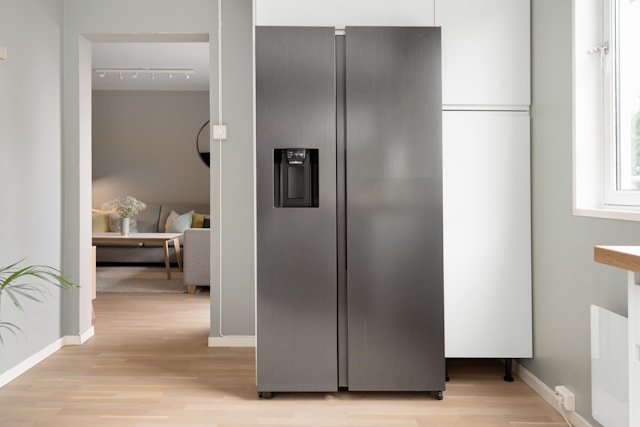

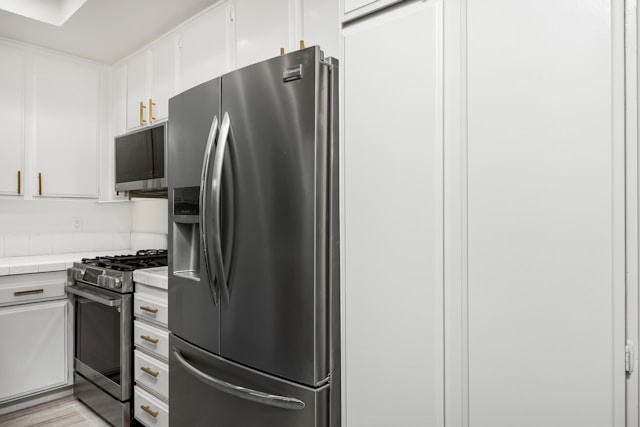
Refrigerators do not run on a fixed schedule.
On hot days, after the door has been opened frequently, or after a large grocery trip, the compressor may operate for longer periods than usual.
But if your refrigerator seems to run almost constantly and rarely shuts off, something may be causing it to work harder than necessary.
That can increase energy consumption and may eventually shorten the life of important components.
Start With the Room Temperature
The environment around the refrigerator affects how hard the cooling system needs to work.
A refrigerator located in a very warm kitchen, near an oven, next to direct sunlight, or inside a poorly ventilated enclosure may run longer than the same appliance in a cooler location.
Make sure there is adequate ventilation around the refrigerator according to the manufacturer’s installation recommendations.
Check How Often the Doors Are Opened
Every time the refrigerator door opens, warm room air enters the cabinet.
The cooling system then has to remove that heat.
In a busy household, frequent door opening can noticeably increase compressor run time.
The same thing happens if someone regularly leaves the door open while deciding what to take out.
This is normal to a point, but it should not cause the refrigerator to run continuously all day.
Is the Door Actually Closing?
Sometimes a refrigerator door looks closed but is not sealing completely.
A food container may be preventing the door from closing, or the gasket may have become damaged.
Check the entire perimeter of the door seal.
Look for:
- Tears
- Cracks
- Warped sections
- Food residue
- Areas that do not contact the cabinet properly
Warm air entering through a poor seal can force the refrigerator to run much longer than normal.
Dirty Coils Can Increase Run Time
The refrigerator removes heat through the condenser coils.
When these coils become covered in dust, the appliance has a harder time releasing heat.
The compressor may compensate by running longer.
This is particularly common in homes with pets because hair can accumulate around the coils and condenser fan.
Periodic cleaning can improve efficiency and reduce unnecessary stress on the cooling system.
A Temperature Setting That Is Too Cold
Lower is not always better.
Setting the refrigerator much colder than necessary causes the compressor to work harder to maintain that temperature.
Check the control settings before assuming something is broken.
If the appliance is running continuously even at normal settings, there may be a sensor or cooling problem.
Frost Inside the Freezer Can Be a Clue
Heavy frost buildup on the rear freezer wall may indicate a defrost-system problem.
Modern frost-free refrigerators periodically melt ice from the evaporator coils.
If the defrost heater, sensor, thermostat, or control system fails, ice can build up around the evaporator.
Eventually, the ice restricts airflow.
The refrigerator may then run almost constantly while the fresh-food compartment becomes warmer.
A Faulty Temperature Sensor Can Keep the Compressor Running
The refrigerator uses sensors or thermostats to determine when cooling is necessary.
If a sensor provides incorrect temperature information, the control system may continue requesting cooling even after the cabinet has reached the proper temperature.
This can cause unusually long compressor cycles.
Testing temperature sensors usually requires electrical measurement and model-specific specifications.
What About the Compressor?
Continuous operation can also be associated with a weak compressor or a problem within the sealed refrigeration system.
In these situations, the system may be running constantly because it cannot produce enough cooling.
One important clue is the combination of two symptoms:
The refrigerator runs almost all the time, but the temperature inside is still too warm.
That usually deserves professional diagnosis.
A New Refrigerator May Run Longer
Newer high-efficiency refrigerators sometimes operate differently from older models.
Instead of frequently switching completely on and off, some use variable-speed compressors that run at lower power for extended periods.
Long operation is not automatically a sign of failure.
The important question is whether the refrigerator maintains the correct temperature without unusual noises, excessive heat, frost buildup, or other symptoms.
When Should You Call a Technician?
Consider having the refrigerator inspected if it runs continuously and you also notice:
- Food is not staying cold
- The freezer temperature is rising
- Heavy frost buildup
- Unusual clicking or buzzing
- Excessive heat near the compressor
- High energy usage
- Water leakage
- Weak airflow inside the refrigerator
These symptoms can help a technician narrow down the cause quickly.
Keep Your Refrigerator Running Efficiently
A refrigerator that never seems to stop running may simply need cleaning or better airflow, but it can also indicate a fan, sensor, defrost, or sealed-system problem.
Our appliance repair technicians can diagnose excessive run-time issues and determine whether your refrigerator needs maintenance or repair.
Contact us today to schedule refrigerator repair service and keep your appliance operating efficiently.